
Be yourself; Everyone else is already taken.
— Oscar Wilde.
Technology for Innovators.
Be yourself; Everyone else is already taken.
— Oscar Wilde.

When it comes to space, there’s a problem with our human drive to go all the places and see all the things. A big problem. It’s, well, space. It’s way too big. Even travelling at the maximum speed the Universe allows, it would take us years to reach our nearest neighbouring star.
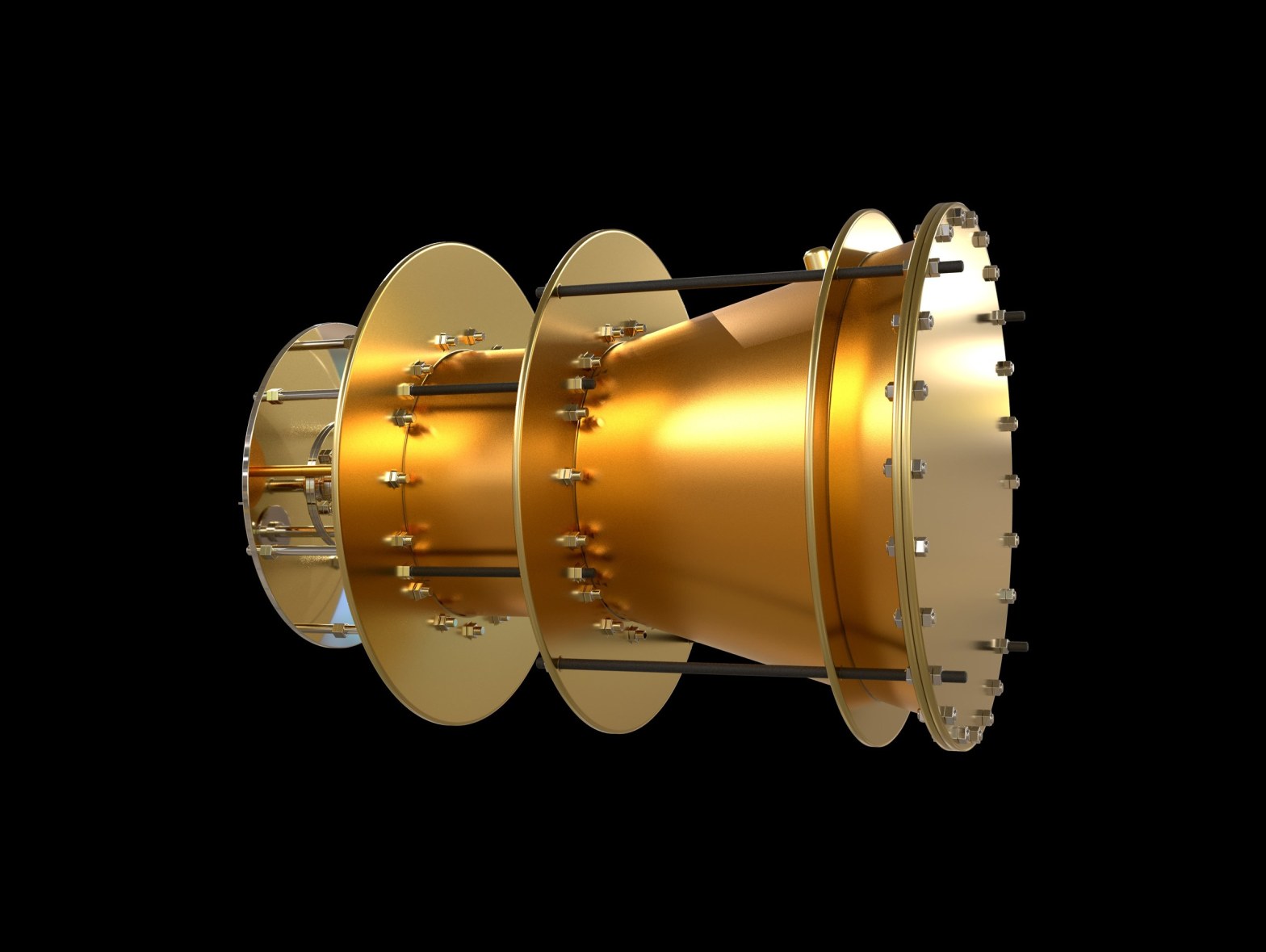
But another human drive is finding solutions to big problems. And that’s what NASA engineer David Burns has been doing in his spare time. He’s produced an engine concept that, he says, could theoretically accelerate to 99 percent of the speed of light – all without using propellant.
He’s posted it to the NASA Technical Reports Server under the heading “Helical Engine“, and, on paper, it works by exploiting the way mass can change at relativistic speeds – those close to the speed of light in a vacuum. It has not yet been reviewed by an expert.

According to the principle of the conservation of momentum – in which the momentum of a system remains constant in the absence of any external forces – this should be not completely possible.
But! There’s a special relativity loophole. Hooray for special relativity! According to special relativity, objects gain mass as they approach light speed. So, if you replace the weight with ions and the box with a loop, you can theoretically have the ions moving faster at one end of the loop, and slower at the other.
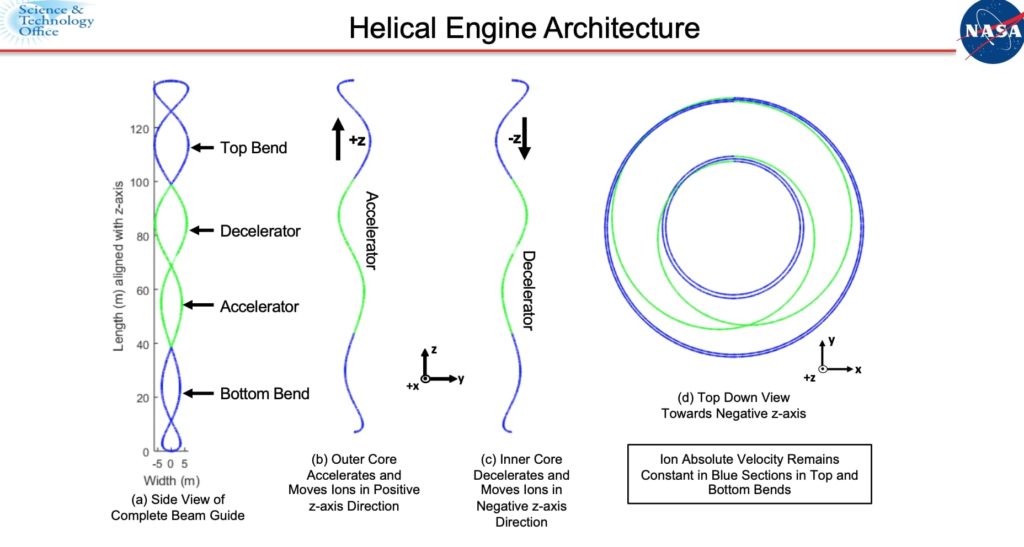
But Burns’ drive isn’t a single closed loop. It’s helical, like a stretched out spring – hence “helical engine”.
“The engine accelerates ions confined in a loop to moderate relativistic speeds, and then varies their velocity to make slight changes to their mass. The engine then moves ions back and forth along the direction of travel to produce thrust,” he wrote in his abstract.
“The engine has no moving parts other than ions traveling in a vacuum line, trapped inside electric and magnetic fields.”
It sounds really nifty, right? And it is – in theory. But it’s not without significant practical problems.
According to New Scientist, the helical chamber would have to be pretty large. Around 200 metres (656 feet) long and 12 metres (40 feet) in diameter, to be precise.
And it would need to generate 165 megawatts of energy to produce 1 newton of thrust. That’s the equivalent of a power station to produce the force required to accelerate a kilogram of mass per second squared. So a lot of input for a teeny tiny output. It is horribly inefficient.
But in the vacuum of space? It just might work. “The engine itself would be able to get to 99 per cent the speed of light if you had enough time and power,” Burns told New Scientist.
And here’s the other thing. Humans – not all of us, but still more than a few – desperately want to go to interstellar space. We may never get there. But if we never even try to think about it, that “may” becomes a “definitely.” What’s that saying – you miss 100 percent of the shots you don’t take?
Burns notes the efficiency problem in his presentation, and also adds that his work hasn’t been reviewed by experts, and there may be errors in his maths. We don’t exactly have the blueprints for a fully functional space travel engine here.
What we do have is a piece of groundwork that could be used to develop such an engine. What we have is a dream of the stars.
LINK: https://www.sciencealert.com/no-this-new-space-engine-isn-t-going-to-break-physics

A computer network is a group of devices connected with each other through a transmission medium such as wires, cables etc. These devices can be computers, printers, scanners, Fax machines etc. The purpose of having computer network is to send and receive data stored in other devices over the network.
The purpose of having computer network is to send and receive data stored in other devices over the network. These devices are often referred as nodes. There are FIVE BASIC COMPONENTS of a computer network:
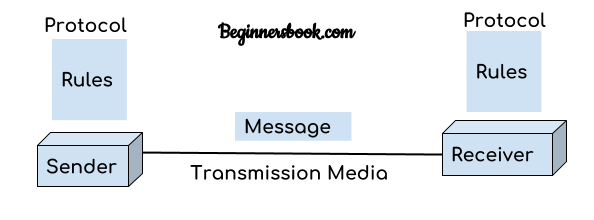
Message: It is the data or information which needs to be transferred from one device to another device over a computer network.
Sender: Sender is the device that has the data and needs to send the data to other device connected to the network.
Receiver: A receiver is the device which is expecting the data from other device on the network.
Transmission media: In order to transfer data from one device to another device we need a transmission media such as wires, cables, radio waves etc.
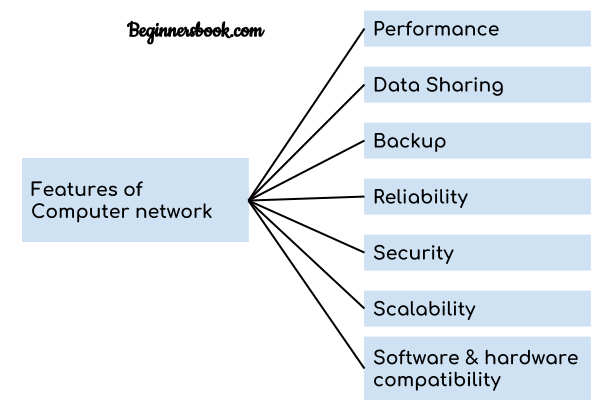
A computer network has following features:
Performance: Performance of a computer network is measured in terms of response time. The response time of sending and receiving data from one node (computer in a computer network are often referred as node) to another should be minimal.
Data Sharing: One of the reason why we use a computer network is to share the data between different systems connected with each other through a transmission media.
Backup: A computer network must have a central server that keeps the backup of all the data that is to be shared over a network so that in case of a failure it should be able to recover the data faster.
Software and hardware compatibility: A computer network must not limit all the computers in a computer network to use same software and hardware, instead it should allow the better compatibility between the different software and hardware configuration.
Security: A computer network should be secure so that the data transmitting over a network should be safe from unauthorised access. Also, the sent data should be received as it is at the receiving node, which means there should not be any loss of data during transmission.
Scalability: A computer network should be scalable which means it should always allow to add new computers (or nodes) to the already existing computer network.
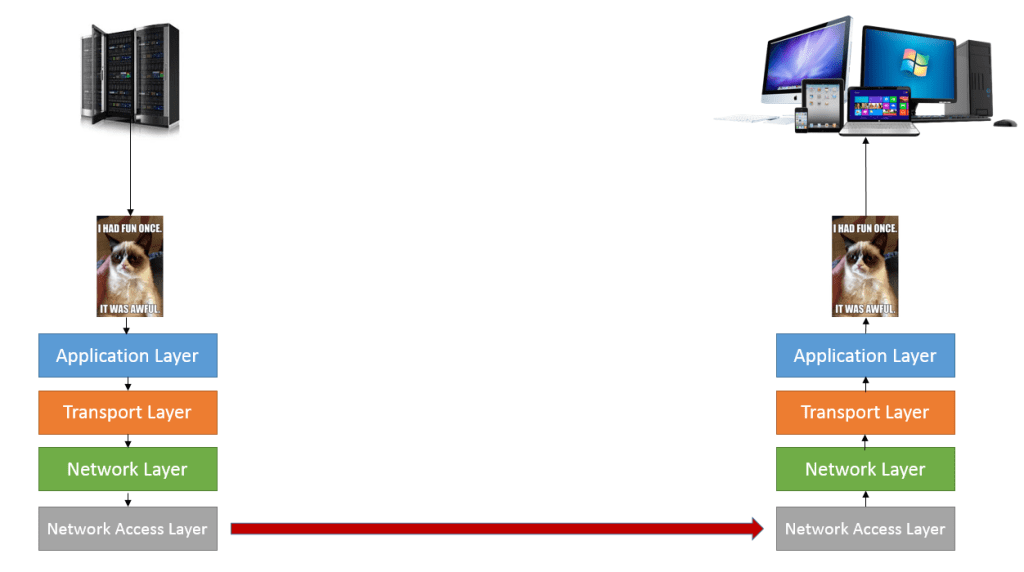
Different types of (private) networks are distinguished based on their size (in terms of the number of machines), their data transfer speed, and their reach. Private networks are networks that belong to a single organisation. There are usually said to be three categories of networks:
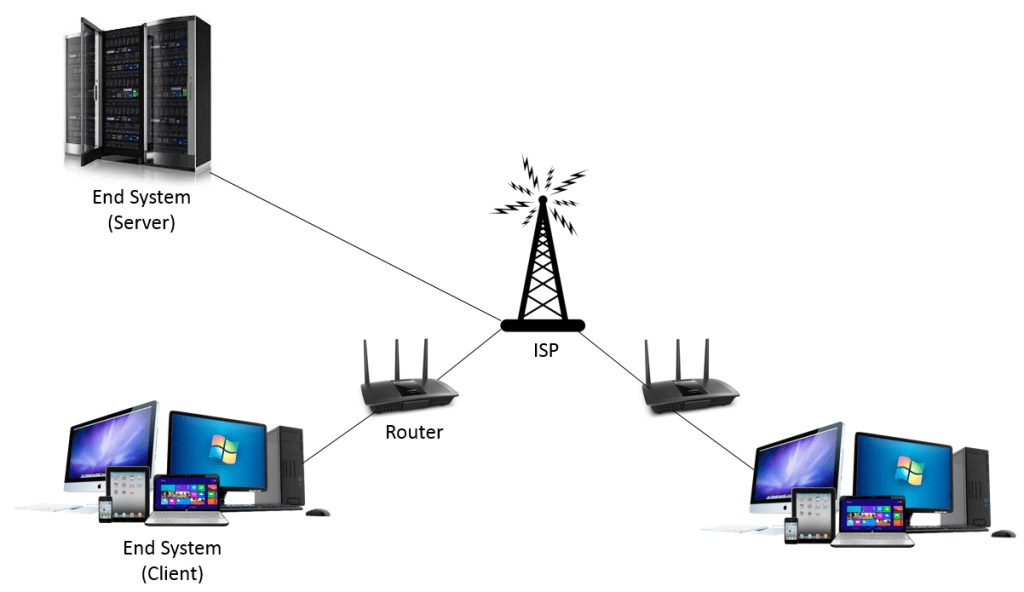
There are two other types of networks: TANs (Tiny Area Network), which are the same as LANs but smaller (2 to 3 machines), and CANs (Campus Area Networks), which are the same as MANs (with bandwidth limited between each of the network’s LANs).
LAN stands for Local Area Network. It’s a group of computers which all belong to the same organisation, and which are linked within a small geographic area using a network, and often the same technology . A local area network is a network in its simplest form. Data transfer speeds over a local area network can reach up to 10 Mbps (such as for an Ethernet network) and 1 Gbps (as with FDDI or Gigabit Ethernet). A local area network can reach as many as 100, or even 1000, users. By expanding the definition of a LAN to the services that it provides, two different operating modes can be defined.
MANs (Metropolitan Area Networks) connect multiple geographically nearby LANs to one another (over an area of up to a few dozen kilometres) at high speeds. Thus, a MAN lets two remote nodes communicate as if they were part of the same local area network. A MAN is made from switches or routers connected to one another with high-speed links (usually fibre optic cables).
A WAN (Wide Area Network or extended network) connects multiple LANs to one another over great geographic distances. The speed available on a WAN varies depending on the cost of the connections (which increases with distance) and may be low. WANs operate using routers, which can “choose” the most appropriate path for data to take to reach a network node. The most well-known WAN is the Internet.
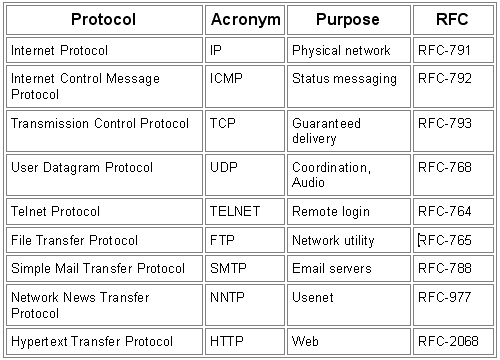
There are two theoretical models used to describe the way networking should work.
It covers the following topics –

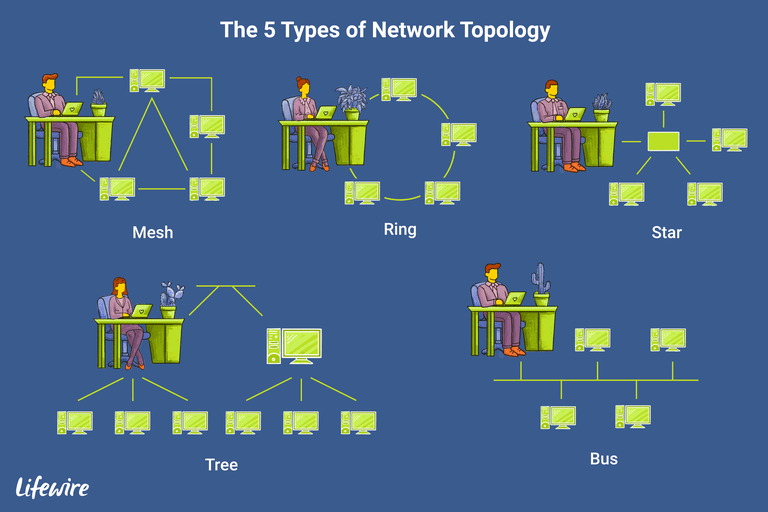
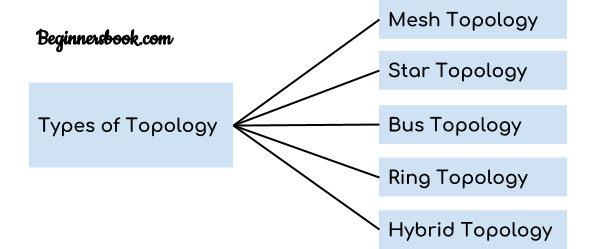
There are five types of topology in computer networks:
1. Mesh Topology
2. Star Topology
3. Bus Topology
4. Ring Topology
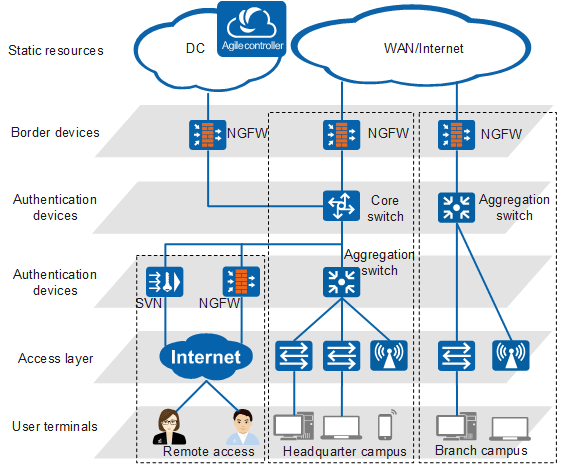
A Computer Architecture is a design in which all computers in a computer network are organized. A architecture defines how the computers should get connected to get the maximum advantages of a computer network such as better response time, security, scalability etc. The two most popular computer architectures are P2P (Peer to Peer) and Client-Server architecture.
LINK: https://beginnersbook.com/2019/03/introduction-to-computer-network/
FOLLOW US: https://instagram.com/tech.rangers?igshid=1pdqff2ogi9lb
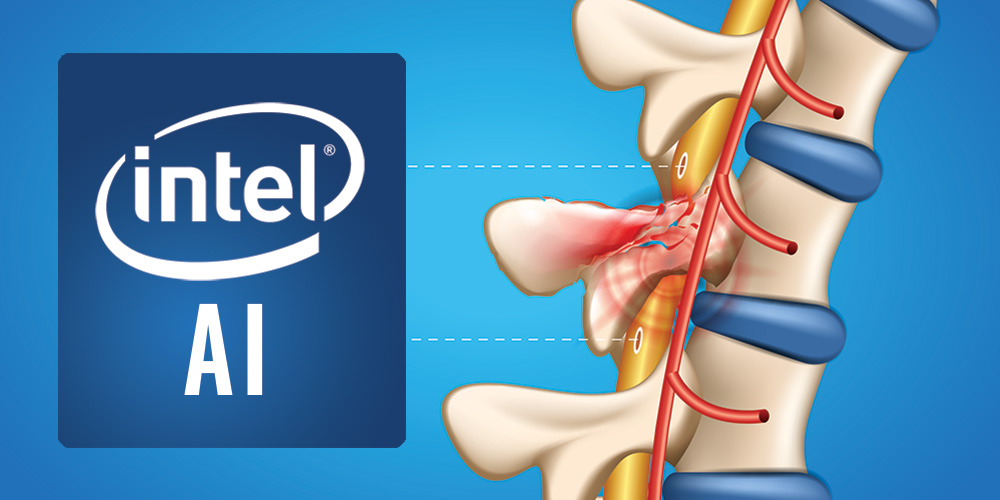
What’s New: Brown University is exploring concepts with Intel technology for an Intelligent Spine Interface project that aims to use artificial intelligence (AI) technology to restore movement and bladder control for patients paralyzed by severe spinal cord injuries.
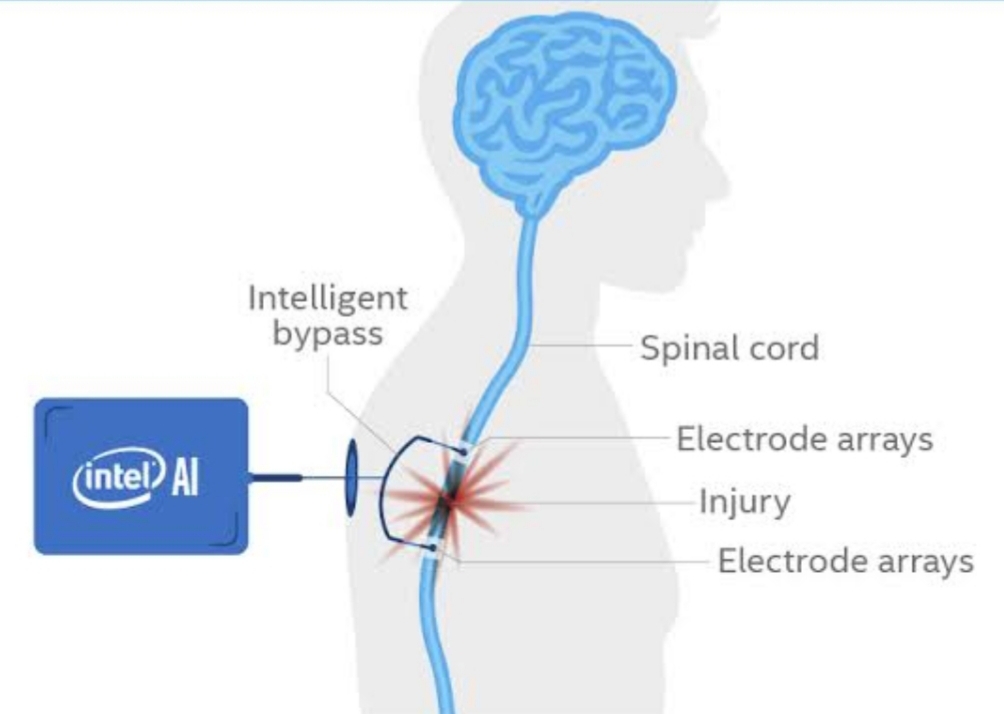
How It Will Work: During the two-year program, researchers will record motor and sensory signals from the spinal cord and use artificial neural networks to learn how to stimulate the post-injury site to communicate motor commands. Surgeons at Rhode Island Hospital near Brown University will implant electrode arrays on both ends of a patient’s injury site, creating an intelligent bypass to eventually allow the severed nerves to communicate in real time. Researchers are considering Intel AI open source software such as nGraph and Intel AI accelerator hardware to meet the real-time requirements of this application.
“A spinal cord injury is devastating, and little is known about how remaining circuits around the injury may be leveraged to support rehabilitation and restoration of lost function. Listening for the first time to the spinal circuits around the injury and then taking action in real time with Intel’s combined AI hardware and software solutions will uncover new knowledge about the spinal cord and accelerate innovation toward new therapies,” said David Borton, assistant professor of engineering, Brown University.
Why It Matters: The human body is unable to regenerate severed nerve fibers. In the case of a severe spinal injury, the brain’s electrical commands will no longer reach the muscles, which can lead to paralysis. The National Spinal Cord Injury Statistical Center estimates there are 291,000 people with spinal cord injuries living in the United States, with more than 17,000 new cases each year. Over 30 percent of those spinal cord injuries result in complete tetraplegia or paraplegia.
Intel will bring the software, hardware, and research support to the table. AI and machine learning tools will be developed to process the signals traveling up and down the spinal cord above the injury site.
In reverse, signals moving up the spinal cord from beneath the injury site could potentially be used to stimulate movement above the site.
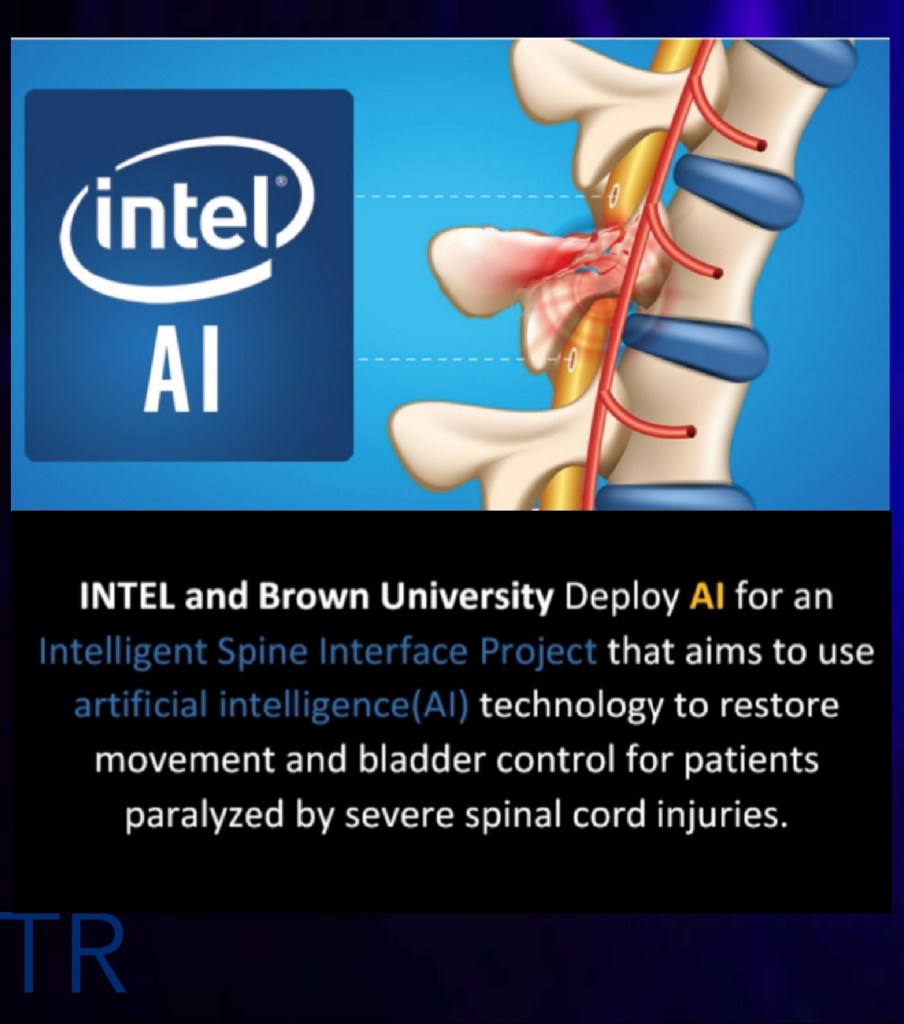
In order to understand how to communicate the right motor commands, the team will record motor and sensory signals directly from the spinal cord. The team will collect data from the Rhode Island Hospital by implanting electrode arrays into volunteer patients’ spinal cords.
The final aim is to create a fully-implantable device that works on a long-term basis. The device would enable the severed nerves to communicate immediately upon receiving the brain’s electrical signals, just like those without spinal cord injuries.
This is an example post, originally published as part of Blogging University. Enroll in one of our ten programs, and start your blog right.
You’re going to publish a post today. Don’t worry about how your blog looks. Don’t worry if you haven’t given it a name yet, or you’re feeling overwhelmed. Just click the “New Post” button, and tell us why you’re here.
Why do this?
The post can be short or long, a personal intro to your life or a bloggy mission statement, a manifesto for the future or a simple outline of your the types of things you hope to publish.
To help you get started, here are a few questions:
You’re not locked into any of this; one of the wonderful things about blogs is how they constantly evolve as we learn, grow, and interact with one another — but it’s good to know where and why you started, and articulating your goals may just give you a few other post ideas.
Can’t think how to get started? Just write the first thing that pops into your head. Anne Lamott, author of a book on writing we love, says that you need to give yourself permission to write a “crappy first draft”. Anne makes a great point — just start writing, and worry about editing it later.
When you’re ready to publish, give your post three to five tags that describe your blog’s focus — writing, photography, fiction, parenting, food, cars, movies, sports, whatever. These tags will help others who care about your topics find you in the Reader. Make sure one of the tags is “zerotohero,” so other new bloggers can find you, too.

 Tech Rangers