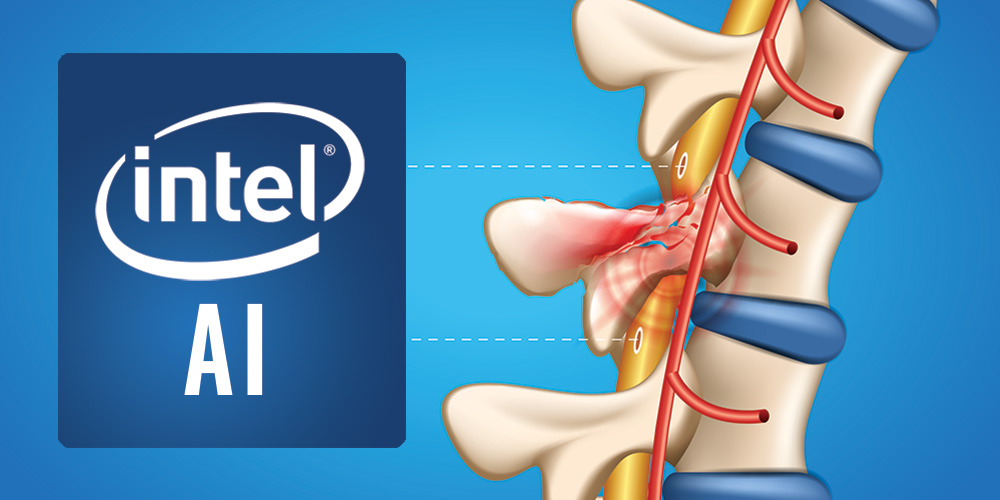
With Hopes of Helping Paralyzed Patients Regain Movement, Intel and Brown University Deploy AI
What’s New: Brown University is exploring concepts with Intel technology for an Intelligent Spine Interface project that aims to use artificial intelligence (AI) technology to restore movement and bladder control for patients paralyzed by severe spinal cord injuries.
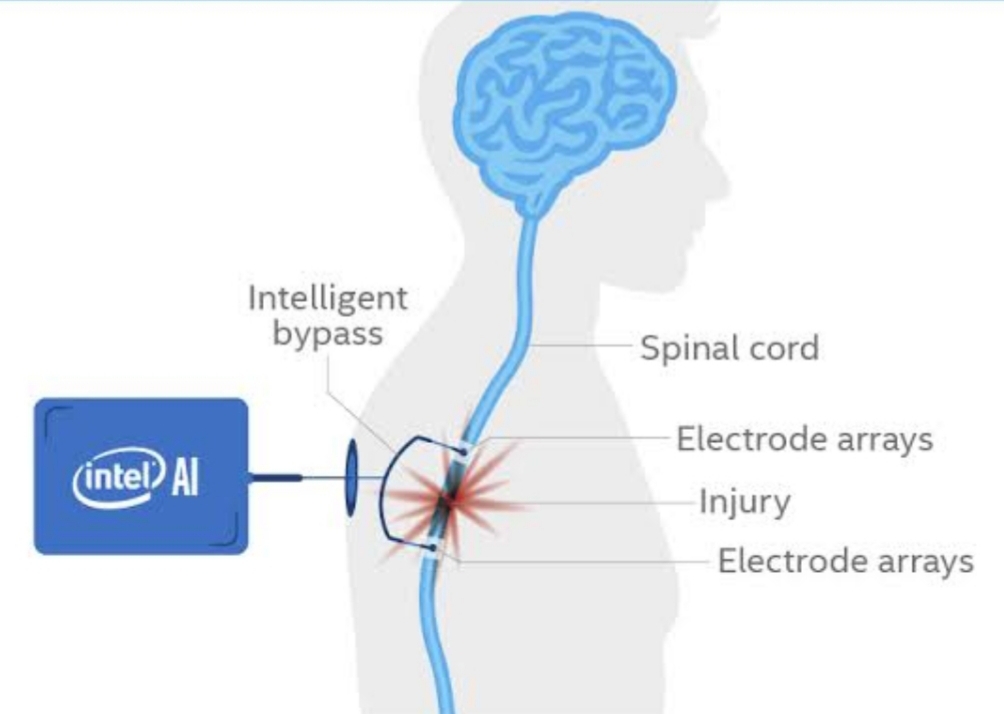
How It Will Work: During the two-year program, researchers will record motor and sensory signals from the spinal cord and use artificial neural networks to learn how to stimulate the post-injury site to communicate motor commands. Surgeons at Rhode Island Hospital near Brown University will implant electrode arrays on both ends of a patient’s injury site, creating an intelligent bypass to eventually allow the severed nerves to communicate in real time. Researchers are considering Intel AI open source software such as nGraph and Intel AI accelerator hardware to meet the real-time requirements of this application.
“A spinal cord injury is devastating, and little is known about how remaining circuits around the injury may be leveraged to support rehabilitation and restoration of lost function. Listening for the first time to the spinal circuits around the injury and then taking action in real time with Intel’s combined AI hardware and software solutions will uncover new knowledge about the spinal cord and accelerate innovation toward new therapies,” said David Borton, assistant professor of engineering, Brown University.
Why It Matters: The human body is unable to regenerate severed nerve fibers. In the case of a severe spinal injury, the brain’s electrical commands will no longer reach the muscles, which can lead to paralysis. The National Spinal Cord Injury Statistical Center estimates there are 291,000 people with spinal cord injuries living in the United States, with more than 17,000 new cases each year. Over 30 percent of those spinal cord injuries result in complete tetraplegia or paraplegia.
Intel will bring the software, hardware, and research support to the table. AI and machine learning tools will be developed to process the signals traveling up and down the spinal cord above the injury site.
In reverse, signals moving up the spinal cord from beneath the injury site could potentially be used to stimulate movement above the site.
In order to understand how to communicate the right motor commands, the team will record motor and sensory signals directly from the spinal cord. The team will collect data from the Rhode Island Hospital by implanting electrode arrays into volunteer patients’ spinal cords.
The final aim is to create a fully-implantable device that works on a long-term basis. The device would enable the severed nerves to communicate immediately upon receiving the brain’s electrical signals, just like those without spinal cord injuries.
 Tech Rangers